

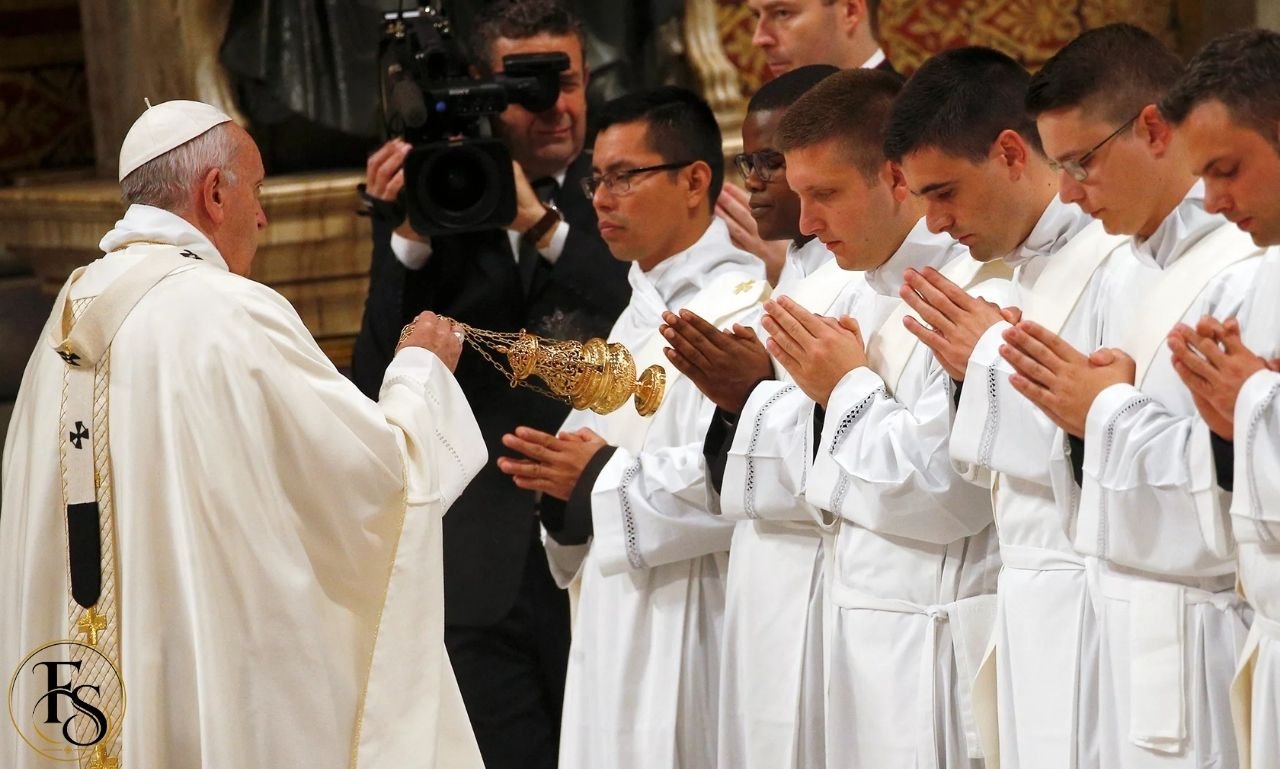
If you are looking for Catholic Mass prayers and responses, this guide explains the main prayers, congregational responses, and different parts of the Mass in a simple way. Whether you are attending Mass for the first time, returning after some time away, or simply want to understand the order of the celebration better, these explanations can help you participate with greater confidence.
The Roman Catholic Mass follows an established liturgical structure. It includes the Introductory Rites, Liturgy of the Word, Liturgy of the Eucharist, and Concluding Rites. The exact readings, prayers, chants, and some responses can vary according to the day, feast, season, or celebration.
What Are Catholic Mass Prayers and Responses?
Catholic Mass prayers and responses are the prayers, dialogues, acclamations, and responses spoken or sung by the priest, deacon, ministers, choir, and congregation during Mass.
The congregation does not simply listen throughout the celebration. The faithful participate through responses, prayers, singing, gestures, silence, and attentive listening. The General Instruction of the Roman Missal specifically describes the people’s responses to the priest’s greetings and prayers as an important part of active participation.
Some responses occur at nearly every Mass, while others depend on the particular celebration.
The Four Main Parts of the Catholic Mass
The Roman Rite Mass has four broad sections:
- Introductory Rites
- Liturgy of the Word
- Liturgy of the Eucharist
- Concluding Rites
The USCCB’s official Order of Mass follows this structure.
Understanding these four parts makes it much easier to follow the prayers and responses.
1. Introductory Rites
The Mass begins with the Introductory Rites, which prepare the congregation to worship together.
These include:
- Entrance
- Greeting
- Penitential Act
- Glory to God
- Collect
Not every element appears in exactly the same form at every celebration. For example, the Gloria has particular usage depending on the liturgical day.
The Greeting
One of the most familiar exchanges at Mass is the greeting between the priest and congregation.
The priest says:
“The Lord be with you.”
The congregation responds:
“And with your spirit.”
This response is a notable part of the revised English translation of the Roman Missal. The USCCB explains that “And with your spirit” more closely reflects the Latin Et cum spiritu tuo.
The Penitential Act
The Penitential Act gives the congregation an opportunity to acknowledge sin and ask for God’s mercy.
Depending on the form used, the congregation may participate through a general confession, invocations, or another approved form.
A familiar response is:
“Lord, have mercy.”
The traditional Greek forms Kyrie, eleison and Christe, eleison may also be used.
Many people explore organized devotional traditions to learn about their prayers, history, and spiritual practices. A Legion of Mary prayers Tessera guide can help readers understand the prayers and traditions connected with this well-known Catholic devotion.
The Gloria
The Gloria, or Glory to God, is a hymn of praise used on particular days and celebrations.
It praises God the Father and acknowledges Jesus Christ. It is generally associated with Sundays outside Advent and Lent, as well as certain solemn celebrations, although the exact liturgical usage depends on the calendar.
2. Liturgy of the Word
The Liturgy of the Word centers on Sacred Scripture.
It normally includes:
- First Reading
- Responsorial Psalm
- Second Reading on Sundays and solemnities
- Gospel Acclamation
- Gospel
- Homily
- Profession of Faith when prescribed
- Universal Prayer
This structure is outlined by the USCCB and the Liturgy Office.
The First Reading Response
After the First Reading, the reader announces the conclusion of the reading.
The congregation responds:
“Thanks be to God.”
This response acknowledges the Word that has been proclaimed.
The USCCB explains that after the First Reading, the reader gives the appropriate acclamation and the people respond “Thanks be to God.”
The Responsorial Psalm
The Responsorial Psalm allows the congregation to participate in the proclamation of Scripture.
A psalm is proclaimed or sung, with the congregation responding with a repeated refrain.
The response changes according to the particular day’s readings.
The Gospel
Before and after the Gospel, catholic mass prayers and responses the congregation participates in responses and acclamations.
The Gospel receives special reverence because Catholics understand Christ as present in the proclamation of the Gospel.
The Homily
The homily helps explain and apply the Scripture readings and the mystery being celebrated.
It gives the congregation an opportunity to reflect on how God’s Word relates to Christian life.
The Profession of Faith
On Sundays and solemnities, the congregation normally professes the Creed.
The Nicene Creed is commonly used, catholic mass prayers and responses although the Apostles’ Creed may also be used on certain occasions.
The General Instruction states that the Creed is said or sung by the priest together with the people on Sundays and solemnities.
The Universal Prayer
The Universal Prayer, also called the Prayer of the Faithful, brings the needs of the Church and the world before God.
The intentions normally include prayers for:
- The Church
- Public authorities and the world
- People experiencing difficulties
- The local community
The congregation responds to each intention through an invocation or silent prayer, according to the form used at that celebration.
3. Liturgy of the Eucharist
The Liturgy of the Eucharist is the second major part of the Mass after the Liturgy of the Word.
It includes:
- Presentation of the Gifts
- Preparation of the Altar
- Prayer over the Offerings
- Eucharistic Prayer
- Communion Rite
The Eucharistic Prayer contains several important elements, including thanksgiving, the acclamation known as the Sanctus, the consecratory prayers, the Memorial Acclamation, and the concluding doxology.
The Prayer Over the Offerings
The priest offers the prescribed prayer over the gifts brought forward.
The congregation participates through a response that joins its prayer with that of the priest.
The Eucharistic Prayer
The Eucharistic Prayer is central to the Liturgy of the Eucharist.
It includes thanksgiving and praise to God and prayers connected with the offering of Christ.
There are several Eucharistic Prayers in the Roman Missal, and the priest selects the appropriate one according to the celebration and liturgical norms.
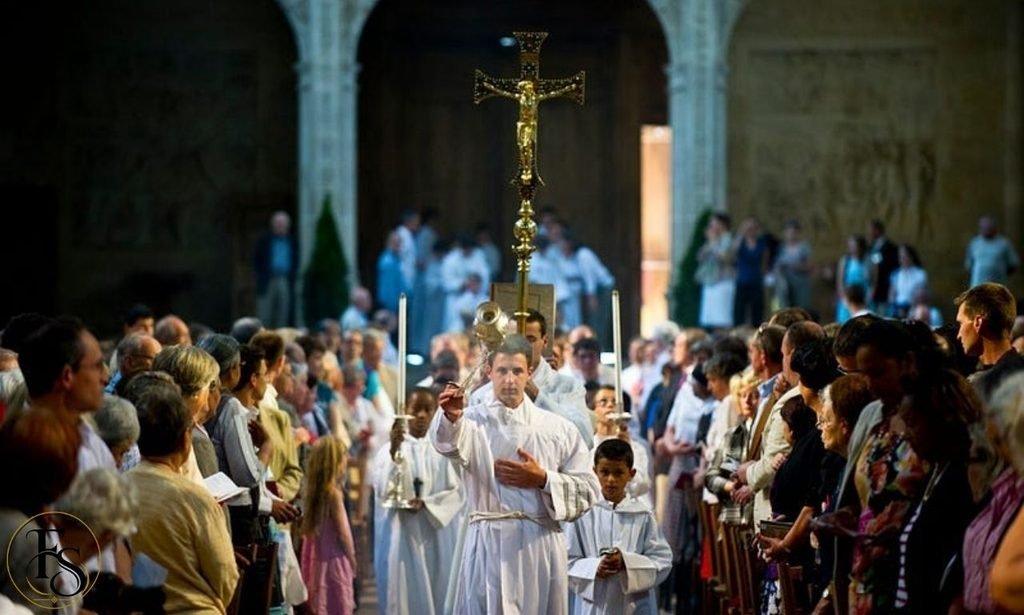
Important Catholic Mass Responses
If you are learning Catholic Mass prayers and responses, these are some of the most important responses to recognize.
“And with your spirit”
This response follows several greetings from the priest.
It is one of the most frequently heard responses during Mass.
“Thanks be to God”
This is commonly heard after Scripture readings.
It expresses gratitude for God’s Word.
“Praise to you, Lord Jesus Christ”
This response is associated with the Gospel acclamation surrounding the proclamation of the Gospel.
“Lord, have mercy”
This is used in the Penitential Act, particularly through the Kyrie.
“Amen”
Amen is a fundamental response throughout Catholic worship. It expresses agreement, affirmation, and assent to what has been prayed or proclaimed.
“We lift them up to the Lord”
This response belongs to the dialogue introducing the Eucharistic Prayer.
“It is right and just”
This is another response within the Eucharistic Prayer dialogue.
These short responses help the congregation participate rather than remain passive observers.
Many people explore traditional devotional practices to learn about their origins, meaning, and spiritual significance. A 12 year prayers of St. Bridget complete prayer guide can help readers understand this historic devotion and its place within Christian prayer traditions.
4. The Holy, Holy, Holy
One of the best-known parts of Catholic Mass prayers and responses is the Sanctus, commonly called the “Holy, Holy, Holy.”
The congregation joins in praising God and acknowledging His glory.
The text begins with the familiar proclamation:
“Holy, Holy, Holy Lord”
It continues with praise of God’s glory and an acclamation concerning the catholic mass prayers and responses one who comes in the Lord’s name. The USCCB identifies the Sanctus as an acclamation within the Eucharistic Prayer.
5. The Memorial Acclamation
After the consecration, the priest introduces the Mystery of Faith.
The congregation responds with one of the approved Memorial Acclamations.
These responses proclaim the mystery of Christ’s death, Resurrection, and coming again.
The particular wording can vary because the Roman Missal provides different approved forms.
6. The Lord’s Prayer
The Lord’s Prayer, or Our Father, is prayed during the Communion Rite.
This prayer comes directly from the teaching of Jesus in the Gospels and holds a central place in Christian prayer.
At Mass, the congregation prays the Lord’s Prayer together before the rite of peace and the breaking of the bread.
7. The Sign of Peace
The Sign of Peace occurs during the Communion Rite.
The priest invites the faithful to offer one another a sign of peace according to the practice of the local community.
The gesture may differ from parish to parish and culture to culture.
The important point is that the congregation participates respectfully and follows the practice of the local church.
8. The Lamb of God
The Agnus Dei, or Lamb of God, accompanies the breaking of the bread.
The congregation asks Christ, the Lamb of God, for mercy and peace.
The official Order of Mass identifies the Lamb of God as part of the Communion Rite.
This prayer prepares the congregation for Holy Communion.
9. The Communion Response
Before receiving Holy Communion, the communicant responds with “Amen” after the minister presents the Eucharist.
This brief response is significant because it expresses faith and assent.
Catholics who are not receiving Communion should follow the practice and guidance of their parish or diocese.
10. Prayer After Communion
After Communion, the priest offers the Prayer after Communion.
This prayer concludes the Communion Rite and asks that the Eucharist bear fruit in the lives of the faithful.
The wording changes according to the particular Mass and liturgical celebration.
11. Concluding Rites
The final section of the Mass is the Concluding Rites.
These may include:
- Brief announcements
- Greeting
- Blessing
- Dismissal
The priest gives the final blessing, and the congregation responds appropriately.
The Mass then concludes with the dismissal.
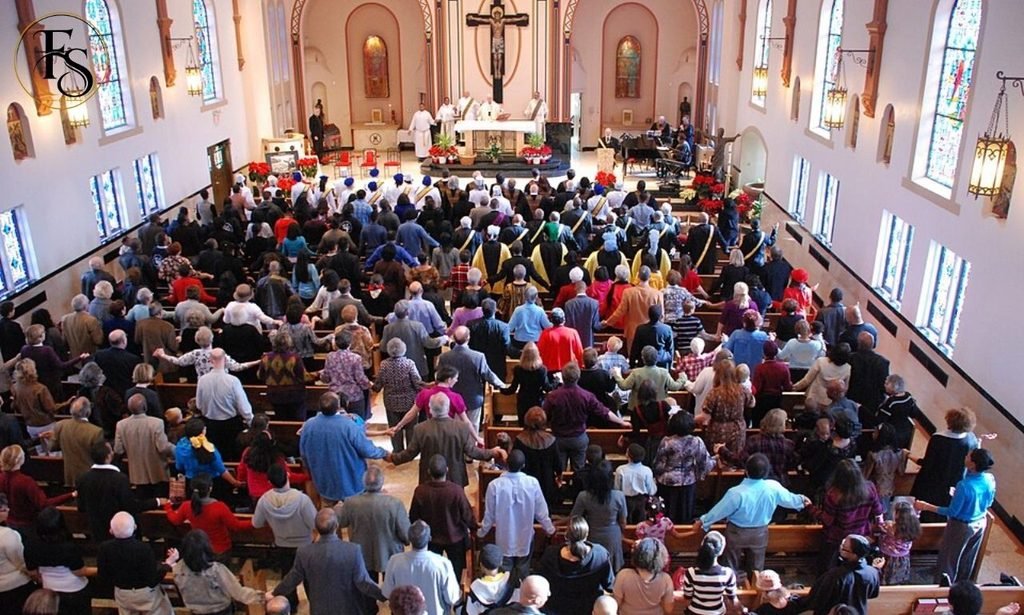
Catholic Mass Prayers and Responses for Beginners
If you are attending Mass for the first time,catholic mass prayers and responses you do not need to memorize everything immediately.
A simple approach is to learn these responses first:
- And with your spirit
- Thanks be to God
- Praise to you, Lord Jesus Christ
- Amen
- Lord, have mercy
- Holy, Holy, Holy
- Lamb of God
- The response during the Eucharistic Prayer dialogue
- The response before receiving Holy Communion
A missal, worship aid, or parish guide can help you follow the remaining prayers.
The exact arrangement can vary according to the day and celebration, so it is normal to see prayers or responses that are different from those used at another Mass.
Why Are Responses Important at Mass?
The responses catholic mass prayers and responses are not simply words that Catholics repeat from memory.
They help the congregation participate in the liturgy as one worshipping community.
The General Instruction of the Roman Missal specifically emphasizes the responses and acclamations of the faithful as part of active participation in the celebration.
Responding together can also help Catholics:
- Stay attentive
- Participate more fully
- Understand the structure of Mass
- Pray as a community
- Become familiar with the liturgical language
- Follow the celebration with greater confidence
Do Catholic Mass Prayers Change?
Yes. Not every prayer is identical at every Mass.
Some parts belong to the Ordinary, catholic mass prayers and responses meaning they are regularly used throughout the liturgical year. Other parts belong to the Proper, meaning they are selected according to the particular day, feast, season, or celebration.
For example, catholic mass prayers and responses the Scripture readings and many prayers change from day to day.
The Gloria and Creed also have specific liturgical usage.
This is why a Sunday Mass can sound different from a weekday Mass or a special celebration.
Are Catholic Mass Prayers the Same Around the World?
The Roman Rite follows an established liturgical structure, but the language used depends on the local church.
The Roman Missal is translated into different languages for use around the world. The catholic mass prayers and responses underlying liturgical structure remains connected to the Roman Missal, while approved translations serve local communities.
Therefore, a Catholic attending Mass in another country may hear different words because the language has changed, even though the basic structure of the Mass remains recognizable.
How to Follow Catholic Mass Prayers and Responses
If you are still learning Catholic Mass prayers and responses, use these simple steps:
1. Bring or use a missal
A missal or approved parish worship aid can show you the order of Mass.
2. Follow the congregation
When you are unsure about a response, listen to the people around you.
3. Learn the most common responses first
Start with “Amen,” “And with your spirit,” and “Thanks be to God.”
4. Pay attention to the structure
Knowing whether you are in the Liturgy of the Word or Liturgy of the Eucharist makes the celebration much easier to follow.
5. Do not worry about perfection
If you make a mistake, simply continue with the celebration.
Learning the Mass takes time, especially if you are new to Catholic worship.
Catholic Mass Prayers and Responses: Quick Reference
| Part of Mass | What Happens |
|---|---|
| Introductory Rites | The congregation gathers and prepares for worship |
| Penitential Act | The faithful acknowledge sin and seek God’s mercy |
| Gloria | Praise is offered to God on appropriate days |
| Liturgy of the Word | Scripture is proclaimed and explained |
| Creed | The congregation professes the faith when prescribed |
| Universal Prayer | The Church and world are remembered in prayer |
| Liturgy of the Eucharist | The gifts are prepared and the Eucharistic Prayer is celebrated |
| Lord’s Prayer | The congregation prays the Our Father |
| Sign of Peace | The faithful exchange a sign of peace |
| Lamb of God | The congregation asks for mercy and peace |
| Communion | The faithful receive Holy Communion according to Catholic practice |
| Concluding Rites | Blessing and dismissal conclude the celebration |
This overall structure is reflected in the official Order of Mass.
Frequently Asked Questions
What are the main Catholic Mass prayers and responses?
The catholic mass prayers and responses main responses include “And with your spirit,” “Thanks be to God,” “Amen,” and other acclamations used throughout the Mass. The exact prayers and responses depend on the part of Mass and the particular celebration.
What is the most common response at Catholic Mass?
“Amen” is one of the most frequently used responses. “And with your spirit” is also repeated during several priestly greetings and dialogues.
What does “And with your spirit” mean?
It is the congregation’s response to the priest’s greeting. The English translation reflects the Latin Et cum spiritu tuo and is used in the Roman Rite’s revised English translation.
What do Catholics say after the First Reading?
The congregation normally responds “Thanks be to God” after the reader concludes the First Reading.
What do Catholics say before receiving Communion?
The congregation participates in the appropriate Communion responses, and the individual communicant responds “Amen” when receiving the Eucharist.
Is the Gloria said at every Mass?
No. The Gloria is not used at every Mass. Its use depends on the liturgical day and celebration.
Is the Creed said at every Catholic Mass?
No. The Creed is ordinarily professed on Sundays and solemnities and may also be used at certain other celebrations.
What is the difference between the Ordinary and Proper of the Mass?
The Ordinary contains texts and elements used regularly in the celebration, while the Proper includes parts that change according to the particular day, feast, season, or celebration.
Can someone new to Catholicism participate in the responses?
Yes. Visitors and people learning about Catholic worship can follow the congregation and use a missal or parish worship aid. There is no need to memorize everything at once.
Where can I find the official Order of Mass?
The USCCB provides an official Order of Mass resource, while the Liturgy Office provides resources concerning the Roman Missal and its Order of Mass.
Final Thoughts
Learning Catholic Mass prayers and responses becomes much easier when you understand the structure behind them. The Mass is not simply a collection of individual prayers; it is an ordered celebration containing Scripture, prayer, acclamations, Eucharistic worship, silence, and communal participation.
Start by learning the most common responses, then catholic mass prayers and responses gradually become familiar with the different sections of the Mass. A parish missal or approved worship aid can help you follow the exact prayers for each celebration.
1 thought on “Catholic Mass Prayers and Responses: Complete Guide”